Sourdough Starter in the Fridge (The Easy, Low-Maintenance Way)

Keep your sourdough starter in the fridge and skip daily feedings. This low-maintenance method lets you bake straight from cold discard—no stress & no schedule.
This post may contain affiliate links. Please read our disclosure policy.
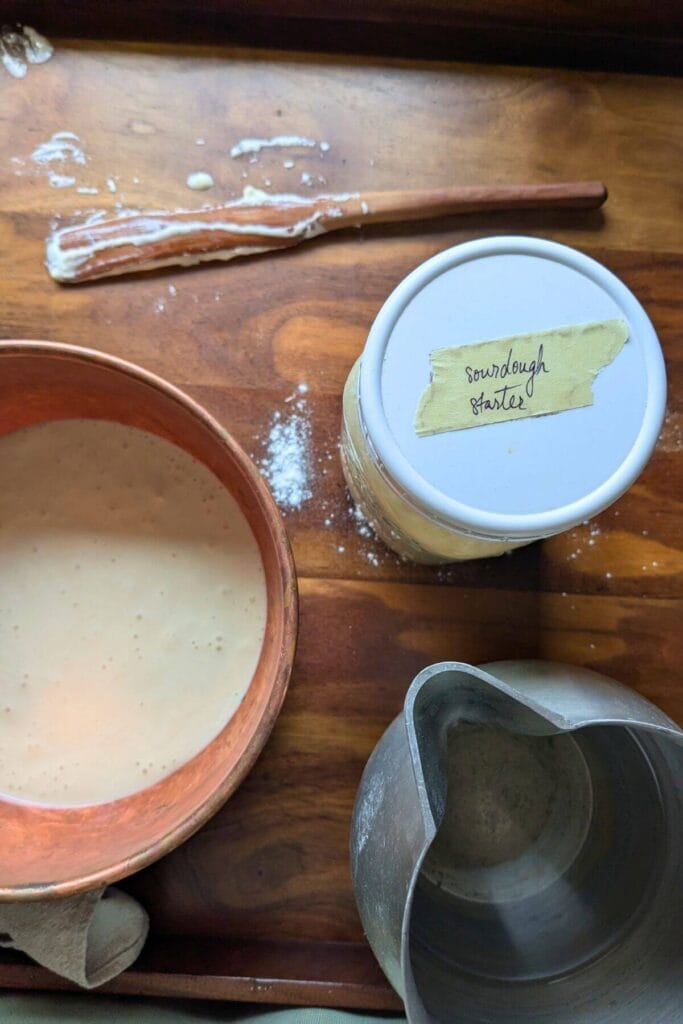
Why You’ll Love Keeping A Sourdough Starter in the Fridge
If sourdough has ever felt like another thing to take care of, you’re not alone.
For a long time, I thought I had to keep a starter on the counter, feed it every day, and plan my life around it. And that’s when sourdough started to feel like a burden.
I wanted a more nutritious way to eat bread. Not another chore!
Little did I know, it could be soooo easy.
Now I keep my sourdough starter in the fridge—full-time. I don’t feed it daily. I don’t bring it to room temperature. I just pull it out when I need it and use it straight from the jar.
This is my “lazy sourdough” method, and it works beautifully. And not only for quick or discard recipes, I use the same starter for my lofty loaves as well!
If you want nourishing sourdough pancakes, waffles, muffins, quick breads—and even lofty sandwich bread—without making your starter another thing to take care of, this is for you.
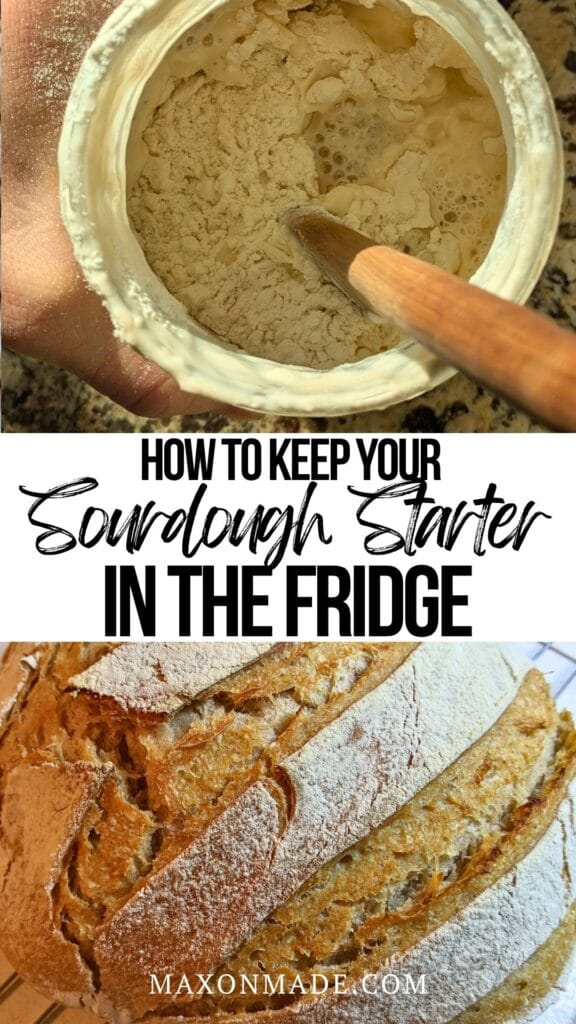
How to Keep Sourdough Starter in the Fridge: The Lazy Sourdough Method
Once you have an established starter (which you can make from your own wild yeast at home or find from someone else), you can easily just store it in the fridge after every feeding time.
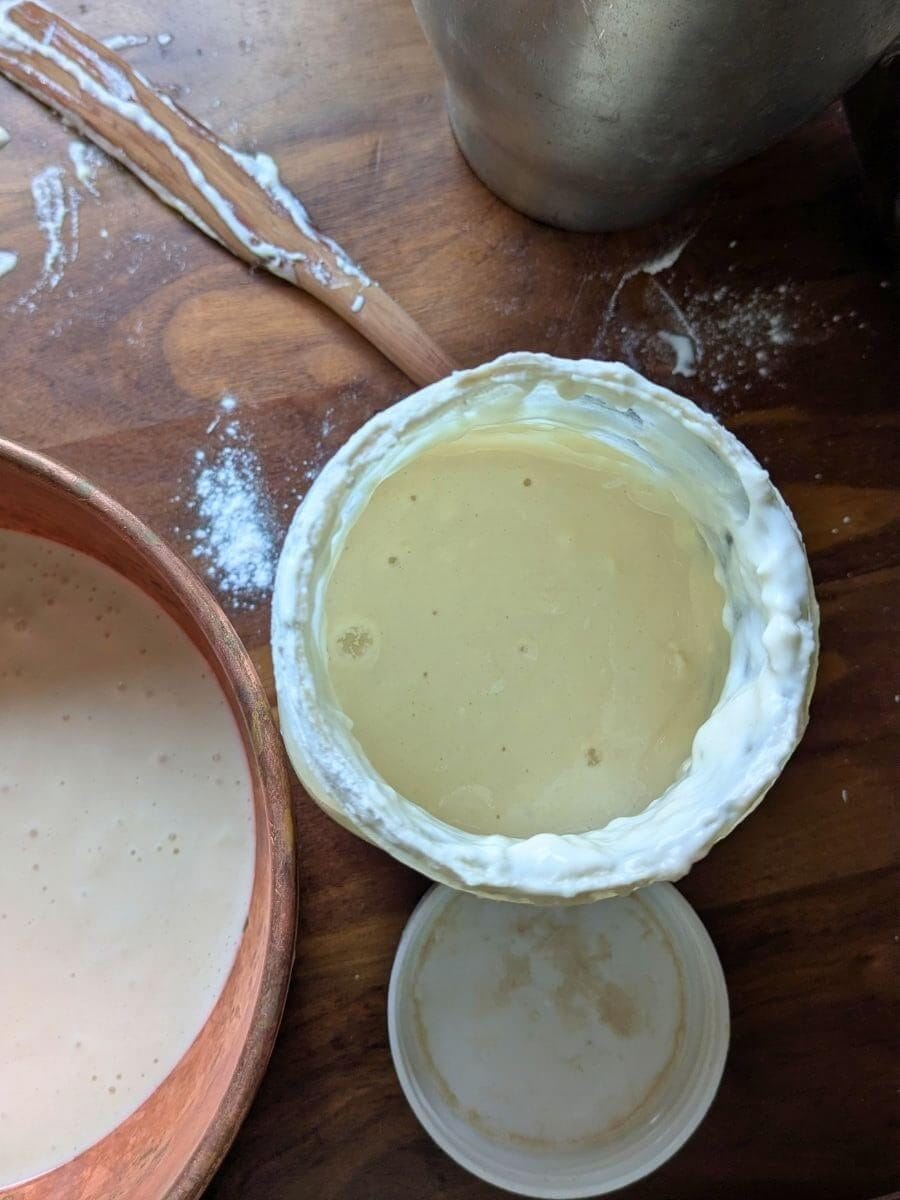
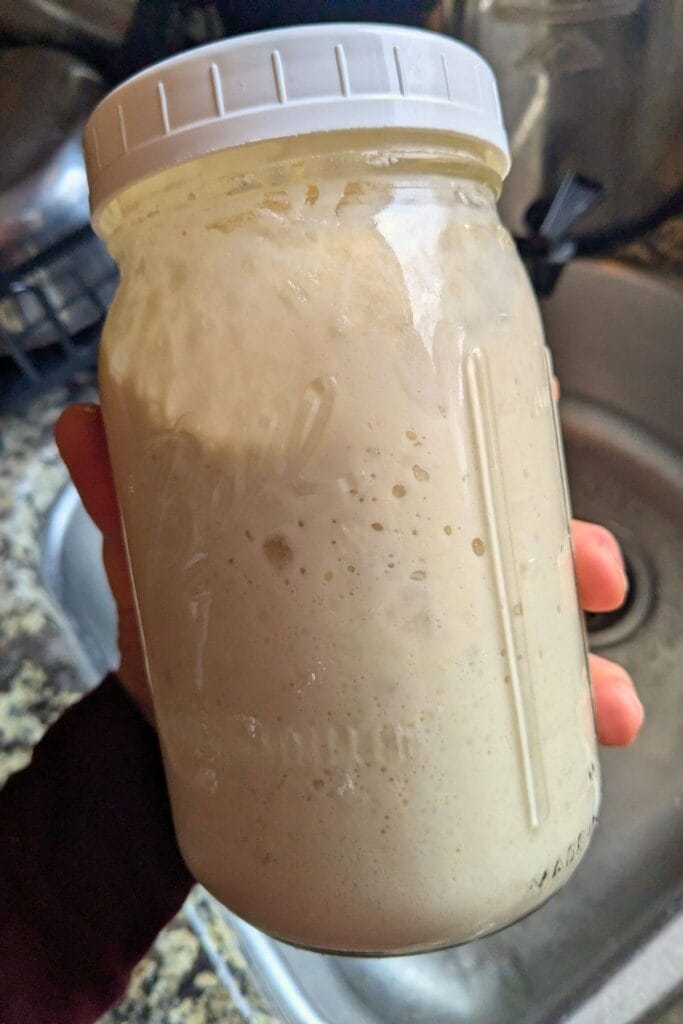
I store mine in a wide-mouth-quart sized mason jar. This jar has held my starter for years and transformed many flours into delicious and nutritious baked goods. The starter only gets transferred to a new jar when the rim of the old one gets so crusted with starter that the lid won’t fit. There’s no need to change it if it’s still working for you.
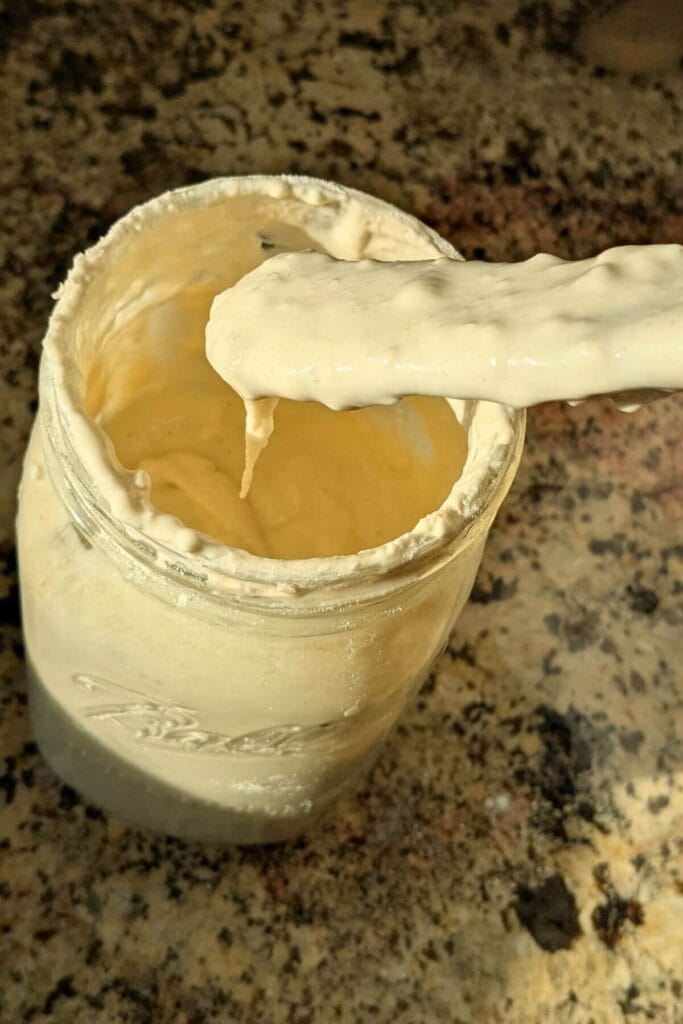
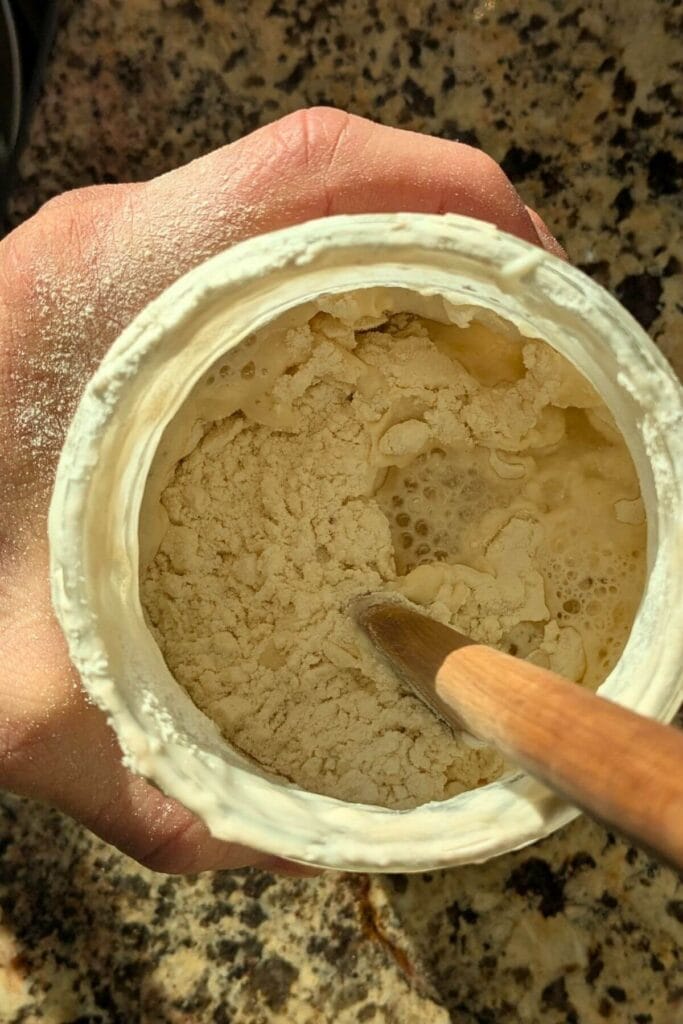
I keep it about half full (so it doesn’t overflow when it’s bubbly) at all times. When I need to use it, I empty out the contents and replace it with more fresh flour and water to create a pudding like consistency.
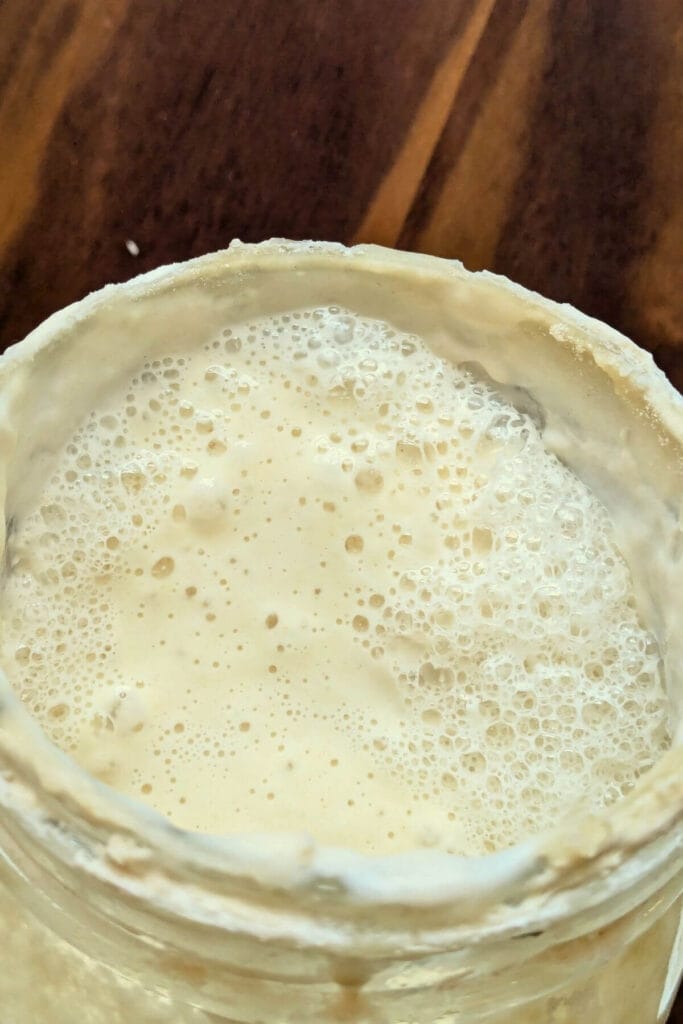
I let it sit on the counter for the rest of the day (or night) to become active and bubbly before I pop it in the fridge.
Leave it there for as long as you need to, then pull it out to use when you need it. (Yes, cold and sleepy is fine!)
When You Should Use & Feed Your Sourdough Starter
I try to use it at least every two weeks. I’ve personally left mine for a month or two and brought it back to life without a problem. But the longer it sits, the more sluggish and acidic it can become, so I don’t recommend letting it sit indefinitely.
It does slowly get more sour and less active, and that would definitely be considered discard.
But if it’s somewhat new and fresh, it’s absolutely still viable for a sandwich bread. And, it’s never hard to refresh it to make pancakes or waffles once in a while.
Basically, you can add that starter to anything to improve its digestibility and flavor profile, and you get a refreshed starter in your jar for when you need it.
When I want to use it, I simply scoop out what I need—or use the whole jar for a recipe—and then feed whatever remains with fresh flour and water. I mix it to about a pudding-like consistency, let it sit on the counter until bubbly, and put it right back in the fridge.
How Much Starter Do I Have To Leave In The Jar To Keep It Going
You’d be surprised by how little starter you need to keep in your jar to keep it alive. I sometimes scrape out almost all of it until there’s only a little still clinging to the sides. Basically a spoonful will do, especially if you’re only mixing up a couple cups at a time.
How to Know if Your Sourdough Starter Is Still Active
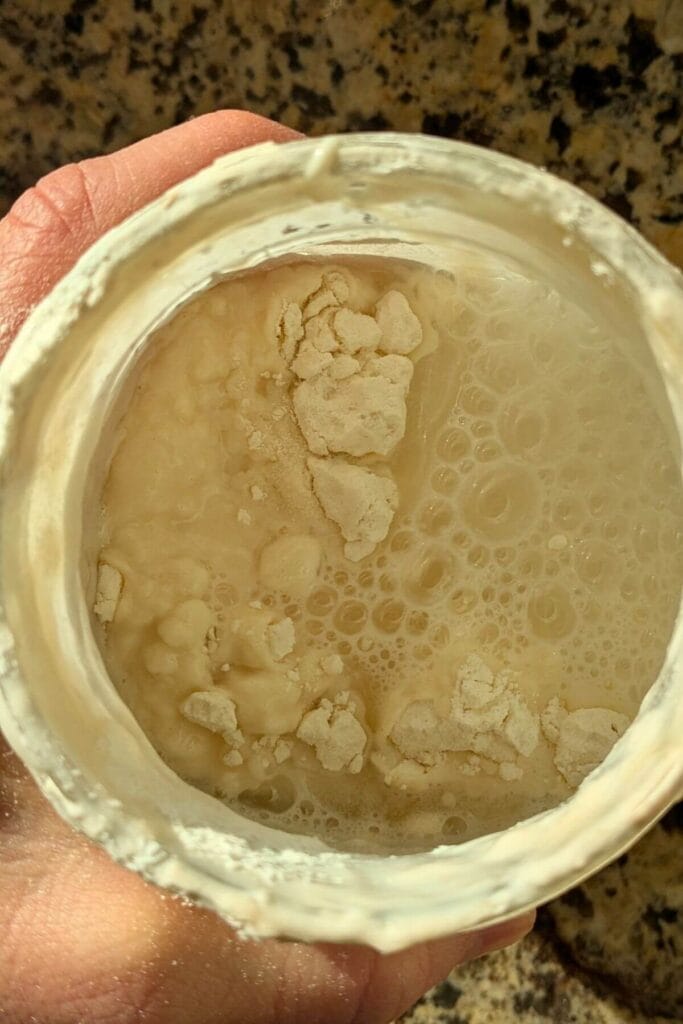
If you’ve left your sourdough starter in your fridge for more than a couple weeks without refreshing it, it is still alive, it’s just really sleepy. So, it might not lift a sandwich loaf like you’d want, and it’s better to use as discard in a quickbread recipe.
If you’ve left it for months and it’s flat and heavy, it may develop a dark liquid on top called hooch.
Just pour this off or stir this in (it will impart a stronger flavor), use the discard in a recipe and feed it. You’d be wise to feed it a little more often after a long sleepy time like this to really activate it again and use it more trustingly in a sandwich bread recipe.
How to Store Your Starter in the Fridge (Simple Steps)
- Choose a jar with a loose lid: A simple wide-mouth mason jar with a lid works great. Keep it loose.
- Add ingredients: Fill it about halfway up with flour, add water slowly and stir it up until it’s the consistency of pudding.
- Feed it before storing: Feed it and let it sit about 8 hours before putting it in the fridge.
- Keep it cold: The colder temperature slows fermentation.
- Feed occasionally: Plan to use it every week or so and feed it so it stays healthy.
Watch The Sourdough Starter in the Fridge Video
The Difference Between My Lazy Sourdough and Discard
Technically, “discard” usually refers to the portion of starter removed during feeding.
I don’t think of my fridge starter as “discard.” It’s simply my starter in its sleepy, refrigerated state.
When it’s been sitting in the fridge for a while (like a month), I know it won’t be super active, so I use it in recipes where I don’t need a strong starter. I take it all out to use in a discard recipe, then feed it as usual.
But, otherwise, it works just fine for any recipe!
Easy Recipes to Use Older Sourdough Discard From The Fridge
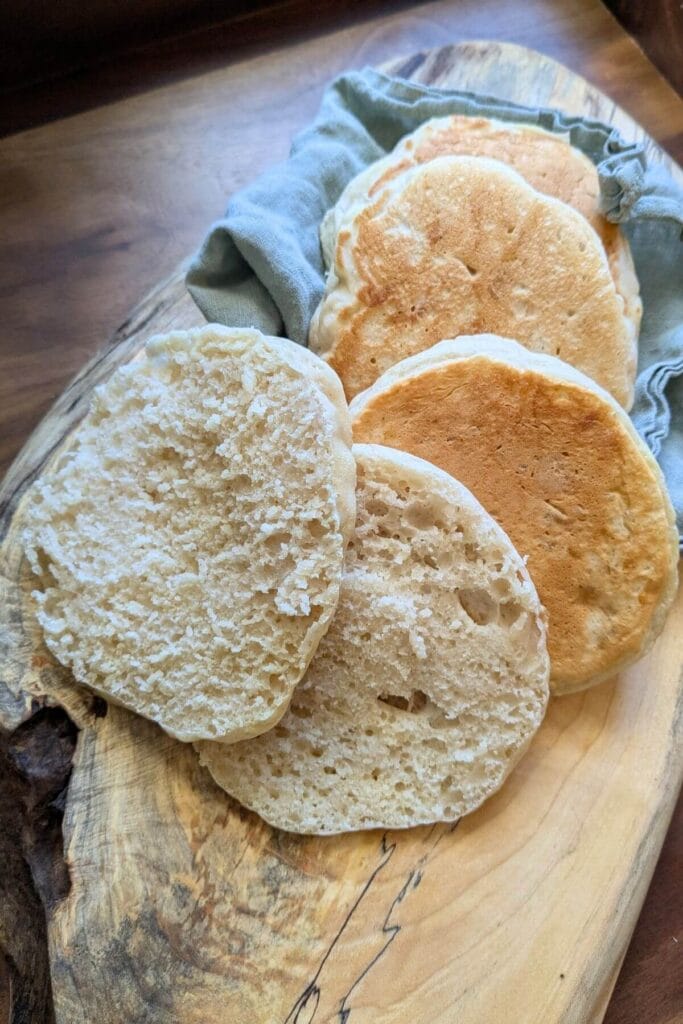
- English muffins
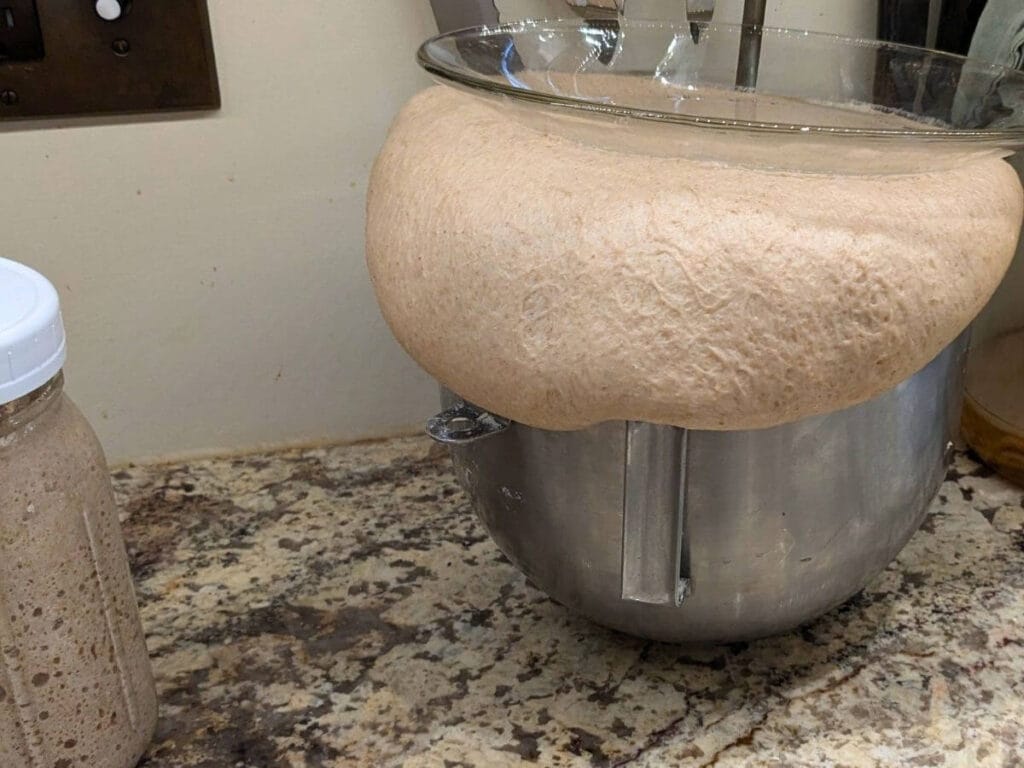
- Sourdough focaccia
- Cinnamon roll focaccia (coming soon!)
- Sourdough waffles (coming soon!)
FAQs
Make Your Sourdough Starter Work For You
Not the other way around! If it’s not easy to maintain, you’re not gonna find it my house! So, keep it cold. Use it when you need it. Feed it when you’re ready. Let it fit into your life instead of planning your life around it.
That’s really the whole idea behind my lazy, low-maintenance sourdough method. You may also be interested in checking out this post on other simple kitchen habits to make life easier.
I hope this article gave you the instructions and confidence you need to start making more easily digestible breads from scratch in your house. I’ll keep the recipes coming, and as always, let me know if you have any questions in the comments section below.


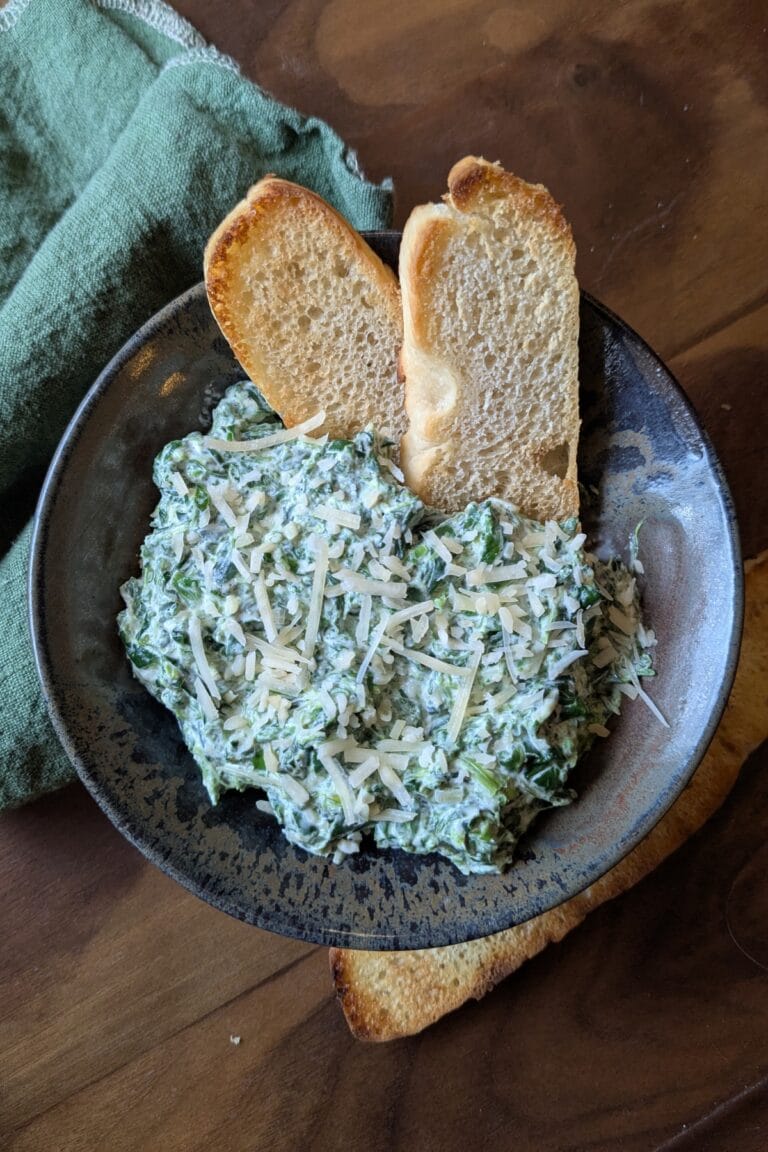


I’ll link more recipes soon! Let me know what you try!